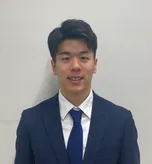
Portrait of Ryota Kimura

Ryota Kimura

木村亮太

The University of Tokyo

The Graduate School of Information Science and Technology Department of Mechano-Informatics

Bio-Intelligence Systems Lab (Takahashi–Shiramatsu Lab)

Research areas

  • Neuroscience - general
  • Sensitivity (kansei) informatics
about/en.md

Motivated by my interest in music, I study how the value of sound is determined and its biological significance. Music is a phenomenon that takes shape in the listener’s perception. I believe that understanding how value is assigned to sound requires considering both the characteristics of the sound and the listener’s physiological state. Through experiments and mathematical models, I aim to understand the principles underlying affective and aesthetic experience.

Publications

Preprints

  1. Dance to Music Generation leveraging Pre-training with Unpaired data and Contrastive Alignment

    Ryota Kimura, Sangheon Park, Natalia Polouliakh, Taketo Akama

    Read abstract

    Dance-to-music generation is a promising task for applications such as choreography support and automatic accompaniment, where temporal coordination between body movement and sound is essential. In particular, using human joint positions as the motion representation is attractive because they explicitly capture body dynamics while being lightweight, privacy-preserving, and easy to integrate with motion capture and pose-estimation pipelines. A central challenge in this setting, however, is the scarcity of high-quality paired dance-music data, since collecting accurately synchronized pairs is costly and often constrained by copyright and performance rights. This makes it difficult to train end-to-end models solely from paired data. To address this issue, we propose a dance-conditioned music generation framework that efficiently exploits both unpaired and paired data. Our method combines pretrained unimodal encoders for motion and music, beat-guided contrastive pretraining to align their feature spaces, and a ControlNet-style conditioning module on top of a pretrained text-to-audio diffusion model. Experiments on AIST++ demonstrate that the proposed techniques improve both dance-music alignment and audio quality, as confirmed by quantitative and qualitative evaluations. Compared to a state-of-the-art method, our approach achieves superior dance alignment performance and competitive audio quality. Code is available at https://github.com/kmraven/AudioLDM-ControlNet .

Conference presentations

  1. 齧歯類の音選好行動における瞳孔径計測

    木村亮太, 星野 有佐, 白松(磯口)知世, 高橋 宏知

    日本動物行動学会

  2. 線虫の移動機構の理解に向けた時空間的な牽引力計測

    木村亮太, 森倉峻, 宮田昌悟, 塚田祐基, 舟橋啓

    理論生物学スプリングスクール(SSTB)

  3. Spatiotemporal Traction Force Measurement Toward Understanding the Locomotion Mechanism of C. elegans

    Ryota Kimura, Takashi Morikura, Shogo Miyata, Yuki Tsukada, Akira Funahashi

    Keio University - Academia Sinica Joint Workshop

  4. Spatiotemporal Traction Force Measurement Toward Understanding the Locomotion Mechanism of C. elegans

    Ryota Kimura, Takashi Morikura, Shogo Miyata, Yuki Tsukada, Akira Funahashi

    25th International Worm Meeting

  5. 線虫の蛇行運動機構の理解に向けた時空間的な応力計測

    木村亮太, 森倉峻, 塚田祐基, 舟橋啓

    CREST革新的計測 第2回領域会議